Little Bird: A Script Font That Balances Charm and Clarity
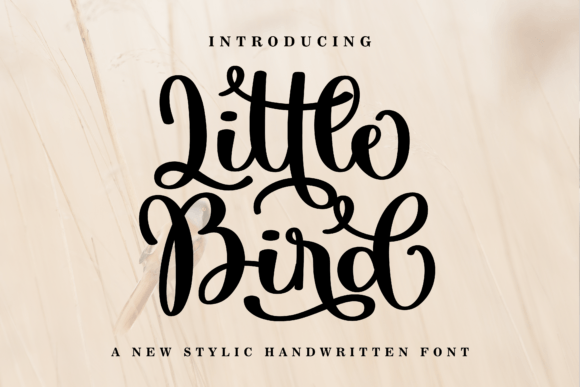
There's a particular challenge in finding a script font that feels genuinely personal without sacrificing readability. Many options lean too heavily into decorative flourishes, becoming illegible at small sizes, or they feel generic and lack character. Little Bird occupies a thoughtful middle ground. It’s a beautifully crafted script font with a flowing, connected style that manages to feel both intimate and clear. The letterforms have a natural, hand-lettered quality, with subtle variations in stroke width that give it an organic warmth. It’s not trying to be a formal calligraphic masterpiece; instead, it captures the effortless elegance of someone with excellent handwriting taking their time.
The personality of Little Bird is approachable and refined. It carries a sense of occasion without being stuffy, making it versatile enough for both celebratory projects and everyday branding that needs a touch of human connection. Its overall appeal lies in this balance—it’s a creative font that doesn’t alienate. For designers and creators, this means it can serve as a reliable workhorse for projects requiring a script font that won’t compromise the message’s clarity.
Where This Script Font Truly Shines
Understanding a font’s ideal context is key to using it effectively. Little Bird excels in environments where a personal, handwritten feel is desired but professionalism is non-negotiable. In digital wedding invitations, it sets a romantic and elegant tone instantly. For blogs and online shops, particularly those in lifestyle, fashion, or artisanal niches, it can elevate headers and featured quotes, making the content feel more curated and special. Its use in social media graphics is particularly potent; in a feed crowded with stark sans-serifs and predictable serifs, Little Bird can stop the scroll with its distinctive, friendly character.
The print applications are equally broad and practical. Think of product clothing and accessories—a subtle Little Bird logo on a tag or a line of text on a tote bag can communicate craftsmanship and care. It’s a fantastic choice for logo design for boutique businesses, salons, bakeries, or any brand whose identity is rooted in a personal touch. On business cards, a name set in Little Bird feels more memorable than one in a standard corporate typeface. It also works beautifully for watermarks on photography or art prints, adding a signature mark that is both protective and aesthetically pleasing. For packaging design, especially for small-batch goods, it can convey the story and care behind the product.
The Strategic Impact on Your Project’s Success
Choosing a typeface like Little Bird is a strategic decision that influences more than just aesthetics. Its flowing script naturally guides the eye, which can be leveraged to create effective visual hierarchy. Using it for headlines or pull quotes draws attention and establishes a focal point, while pairing it with a clean sans serif font for body text ensures readability. This combination is a classic and effective font pairing strategy.
From a branding perspective, consistency is everything. Selecting Little Bird as part of your brand identity toolkit helps build recognition. When a customer sees that specific, graceful script across your website, social media, and product packaging, it creates a cohesive and professional image. It signals that you pay attention to details, which builds trust. The font’s inherent warmth can make a brand feel more accessible and human, fostering better audience engagement. People connect with things that feel genuine, and a well-chosen handwritten font like this can be a powerful conduit for that connection.
A Practical Guide to Implementing Little Bird
Before you commit, it’s wise to test the font within the context of your specific project. First, consider the medium. For web design and digital use, ensure the font file is optimized for screen rendering to maintain its clarity. For print, especially on textured materials like paper for editorial design or fabric for apparel, request or create a sample print to see how the ink interacts with the surface. Little Bird’s fine strokes need to reproduce cleanly.
Evaluate the font pairing options included in the package. A quality premium font often comes with stylistic alternates, ligatures, and sometimes even a complementary serif font or sans serif font. Explore these. Maybe an alternate ‘g’ or ‘y’ suits your layout better. Test how Little Bird looks next to your body copy font at various sizes. Readability is paramount; if the script becomes a tangled mess at 12pt, it’s only suitable for large display applications.
Finally, review the licensing. Since Little Bird is a commercial font, its license will dictate how you can use it. Most licenses cover desktop use for creating logos, documents, and graphics. If you plan to embed the font in a website, app, or software, you may need an additional webfont or digital license. Always check the terms provided by the foundry or distributor to ensure your use—from a small business logo to a mass-produced product line—is properly covered. This due diligence protects your investment and avoids legal issues down the line.
In the end, Little Bird is more than just another script font. It’s a versatile design asset that, when used thoughtfully, can inject personality, clarity, and a professional human touch into a wide array of projects. It’s about finding the right voice for your visual communication, and Little Bird speaks with a charming, confident whisper that people are inclined to listen to.