Injecting Playful Personality with Are You Kidding Me
Every designer hits a wall where clean, corporate lines just won't cut it. Sometimes, a project demands a voice that is less boardroom and more coffee shop conversation—something with grit, humor, and a distinct human touch. This is where Are You Kidding Me steps in. It isn't just a typeface; it is a mood. As a premium font rooted in the handwritten aesthetic, it bypasses the sterile perfection of geometric sans serif options to deliver something raw and engaging. It captures the spirit of a quick sketch on a napkin, retaining the dynamic stroke variations and slight irregularities that make natural writing so compelling. For anyone looking to step away from the rigidity of modern typography, this script font offers a refreshing, bold alternative.
The Anatomy of Attitude: More Than Just a Handwritten Font
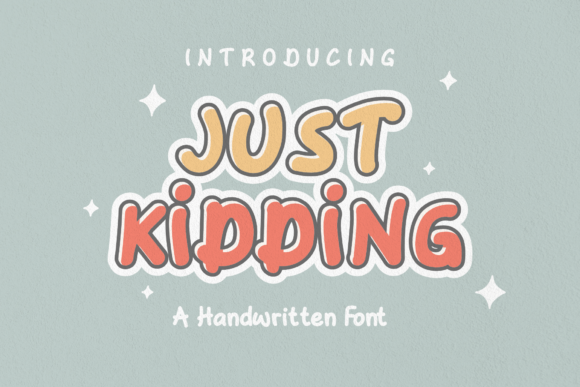
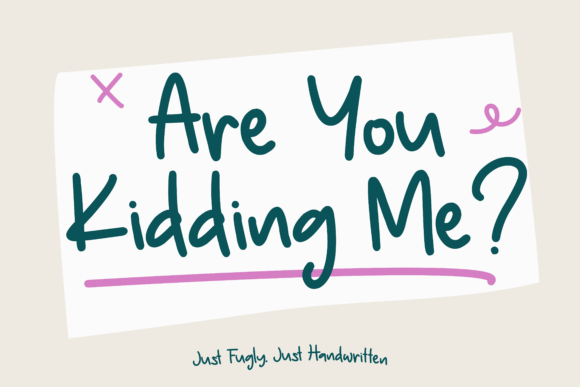
At first glance, Are You Kidding Me feels loud, and that is entirely by design. It belongs to a specific category of creative font that prioritizes expression over uniformity. The letterforms are rounded and thick, mimicking the pressure of a heavy marker or a stylus on a tablet. However, unlike many script fonts that aim for elegance, this typeface leans into a "fugly" aesthetic—celebrating imperfection. You will notice exaggerated ascenders and descenders, particularly in letters like the capital "K" or the lowercase "g," which gives the text a bouncing rhythm on the page.
The visual personality is defined by its spontaneity. It avoids the mathematical precision of a serif font or the clean geometry of a sans serif typeface. Instead, it embraces the "wobble" of natural handwriting. This design choice is crucial because it signals authenticity to the viewer. In an era of AI-generated perfection and highly polished digital assets, the slight imperfections in Are You Kidding Me act as a subconscious signal of humanity. It feels approachable because it looks like a person actually made it, rather than a machine rendering it.
Practical Applications: Where This Font Shines
Knowing what a font looks like is one thing; knowing where to use it is the real skill. Because Are You Kidding Me is a display font, it is not designed for long-form reading. You wouldn't typeset a novel or a technical manual with it. Its high-impact, bold shapes are meant for headlines, subheadings, and callouts where brevity is key.
- Social Media Graphics: This is perhaps its strongest arena. On platforms like Instagram or TikTok, where you have fractions of a second to grab attention, the bold, informal nature of this typeface stops the scroll. It works beautifully for memes, quote graphics, or story overlays that need a conversational tone.
- Branding for Niche Markets: If you are building a brand identity for a coffee shop, a vintage clothing store, a food truck, or a podcast with a casual vibe, this font sets the tone immediately. It tells your audience that you are approachable and fun, not stiff and corporate.
- Packaging Design: In packaging design, especially for artisanal goods, snacks, or youth-oriented products, Are You Kidding Me adds a layer of whimsy. It works well on labels that need to stand out on a crowded shelf by looking "hand-crafted."
- Editorial Design and Publishing: While it shouldn't be used for body text, it serves as a fantastic accent in editorial design. Use it for pull quotes, chapter titles, or sidebar headings in lifestyle magazines to break up the monotony of standard serif or sans serif layouts.
Strategic Implementation: Hierarchy and Pairing
Using a font with this much personality requires a bit of strategy to maintain professionalism. The biggest mistake creatives make with expressive fonts like Are You Kidding Me is overuse. If every word on the page is shouting, the viewer gets overwhelmed, and the visual hierarchy collapses.
The secret to making this font work in a professional context is contrast. You need a "straight man" to its comedian. This is where font pairing comes in. Because Are You Kidding Me is rounded, irregular, and bold, it pairs exceptionally well with clean, neutral typefaces.
- Pair with a Geometric Sans Serif: A clean, light-weight sans serif font (like Helvetica, Futura, or Open Sans) provides the perfect counterbalance. Use the sans serif for your body text and metadata, and let Are You Kidding Me handle the headlines. This creates a clear hierarchy where the handwritten font draws the eye, and the sans serif provides the readable details.
- Pair with a Slab Serif: For a look that feels a bit more "indie" or retro, try pairing it with a sturdy slab serif. The structural rigidity of the serif anchors the flighty nature of the handwritten script.
- Color and Size Considerations: This typeface holds up well at large sizes. Don't be afraid to blow it up. However, pay attention to kerning (the space between letters). Handwritten fonts sometimes have loose default spacing that might need tightening in professional logo design work to ensure the word holds together visually.
Technical and Commercial Considerations
Before committing Are You Kidding Me to a major brand asset or commercial campaign, you need to evaluate the technical specifics. As a premium font, it usually comes with a license, but you must verify the terms. Are you using it for a personal blog, or are you printing it on 10,000 units of merchandise? Commercial font licensing is distinct from personal use, and respecting this protects your business legally.
Additionally, consider the medium. While this typeface is a star in digital design, print requires a bit of testing. Because of its dynamic stroke variations, it can sometimes lose definition if printed at very small sizes on low-quality paper. Always run a test print to ensure the "personality" doesn't turn into "muddy ink" when applied to physical packaging or flyers.
Ultimately, Are You Kidding Me